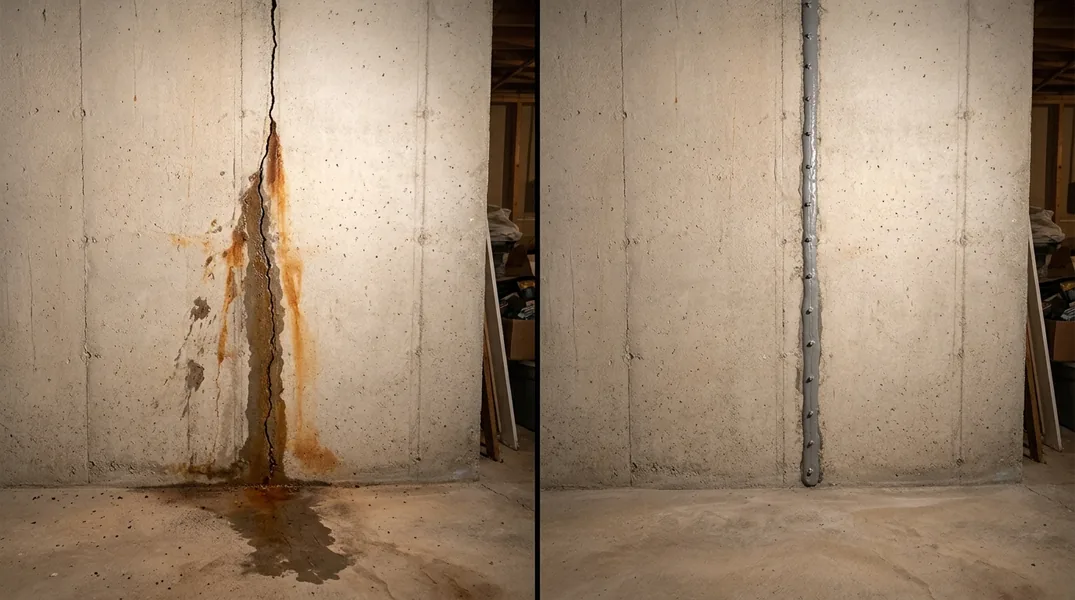
Why Greenville NC Foundation Leaks Are So Common
If you own a home in Greenville, you already know that water has a way of showing up where it should not. What many homeowners do not realize is that the problem is not usually a single crack or a failed downspout. It is the ground itself. Greenville sits on the coastal plain, a region defined by flat terrain and soils that hold moisture far longer than the clay or rocky ground you would find farther inland. When you combine that with a water table that can rise within a few feet of the surface after heavy rain, you get the perfect conditions for Foundation Waterproofing problems to develop quietly and then suddenly.
The result is a cycle that repeats every wet season. Water saturates the soil around your foundation, builds hydrostatic pressure against the basement walls, and finds the smallest path inward. A hairline crack that was invisible last summer becomes a steady seep by February. For homeowners searching for answers about Greenville NC foundation leaks, the first step is understanding that this is a regional geology issue, not a sign that your builder did something wrong. Once you accept that, the solutions become much clearer.
High Water Table Foundation Problems: What Hydrostatic Pressure Does to Your Home
A high water table foundation issue is different from a simple roof leak or a bad window seal. When the water table rises, groundwater pushes against your foundation from every direction. That pressure does not just cause dampness. It can force water through microscopic pores in concrete, widen existing cracks, and even cause bowing or shifting over time. In flat coastal areas, there is nowhere for that water to drain naturally, so it sits against your foundation like a loaded spring.
Homeowners often notice the symptoms before they understand the cause. You might see efflorescence, that white chalky powder on the basement wall, which is a sign of water moving through concrete and leaving minerals behind. You might smell a musty odor in the lower level even when there has been no recent rain. Or you might find that your sump pump runs constantly during wet months. These are all classic signs of a high water table foundation issue, and they rarely resolve on their own. In fact, they usually get worse until the water is actively managed with a proper drainage and waterproofing system.
Coastal Plain Soil Basement Challenges: Why Flat Lots Make It Worse
Flat lots are convenient for driveways and lawns, but they are terrible for water management. On a sloped property, gravity carries surface water away from the house. On a flat coastal plain lot, water from your roof, your neighbor's yard, and the street has nowhere to go but down. The soil here often contains a mix of sand, silt, and clay that drains slowly, so the ground stays saturated long after the rain stops. This is the core of the coastal plain soil basement problem, and it is why so many homes in Winterville and Ayden deal with recurring dampness in crawl spaces and basements.
When the soil around your foundation cannot drain, it becomes a reservoir. That reservoir feeds water into your foundation walls and floor joints year after year. Over time, the constant moisture can soften the soil under the footing, leading to settlement and the cracks that come with it. This is why Pitt County foundation repair often starts with water management rather than structural work. If you fix the cracks without addressing the saturated soil, the cracks come back. The right approach is to control the water first, then repair any damage it has already caused.
Basement Leak Causes in Greenville: Separating Symptoms from Sources
Not every wet basement has the same origin, and understanding the common basement leak causes helps you ask better questions when you call a professional. The most frequent culprit in this region is hydrostatic pressure from saturated soil, but it is not the only one. Poor grading that slopes toward the house, clogged gutters that dump water at the foundation, and downspouts that discharge too close to the wall all contribute. Sometimes the issue is a failed exterior waterproofing membrane that has aged out, or a footing drain that has silted shut over the decades.
Another often-overlooked cause is the capillary action of concrete itself. Concrete is porous, and even a wall with no visible cracks can wick moisture from wet soil into your basement. That is why some homeowners see damp walls but cannot find a single crack. A professional assessment looks at all of these factors together: the soil, the grading, the drainage, the wall condition, and the water table. For homeowners in Farmville and across the region, that kind of holistic evaluation is what separates a temporary patch from a permanent fix. You can request a free estimate to get that assessment started.
Basement Waterproofing Near Me: When to Call a Pro in Greenville
Some homeowners can handle minor dampness with a dehumidifier and a longer downspout. But there is a point where DIY stops working, and it usually arrives faster than people expect in this climate. If you are seeing water on the basement floor after heavy rain, if your walls have visible cracks that weep, if you have had to replace stored items because of moisture, or if your foundation shows signs of movement, it is time to call a professional. Searching for Basement Waterproofing near me is a sign you already suspect the problem is bigger than a shop vac can solve.
A proper solution usually involves one of two approaches. An Interior Drain Tile System captures water at the footing and directs it to a sump pump, keeping the basement dry without excavating the exterior. Exterior Basement Waterproofing addresses the problem from the outside by sealing the wall and improving drainage away from the foundation. The right choice depends on your specific soil, water table, and foundation condition. A local professional who works in this region every day can tell you which approach makes sense for your home, and you can call (252) 417-2783 to talk through your situation.
Foundation Waterproofing Cost in Greenville: What to Budget
Homeowners researching Foundation Waterproofing almost always want to know what it will cost, and the honest answer is that it depends on several variables. The size of the affected area, the severity of the water intrusion, whether you need interior drainage, exterior work, or both, and whether any structural repair is required all affect the final number. A single-wall seepage issue is very different from a full-perimeter system with a sump pump and discharge line. Because of that, any reputable contractor will want to inspect your home before quoting a figure.
What you should budget for is not just the installation but the long-term value of a dry basement. Water damage compounds over time, and delaying repairs often means paying for both waterproofing and foundation repair later. Greenville Waterproofing provides transparent pricing after a thorough inspection, so you know what you are paying for and why. If you have been putting off a call because you are worried about cost, the best move is to get real numbers for your specific home rather than guessing. Reach out to Greenville Waterproofing at (252) 417-2783 or visit the website to schedule your assessment and protect your foundation before the next wet season arrives.
Looking for a professional basement waterproofing contractor in Greenville? Greenville Waterproofing responds fast for all your basement waterproofing needs.
Get a Free QuoteOur services: Basement Waterproofing · Interior Drain Tile System · Exterior Basement Waterproofing