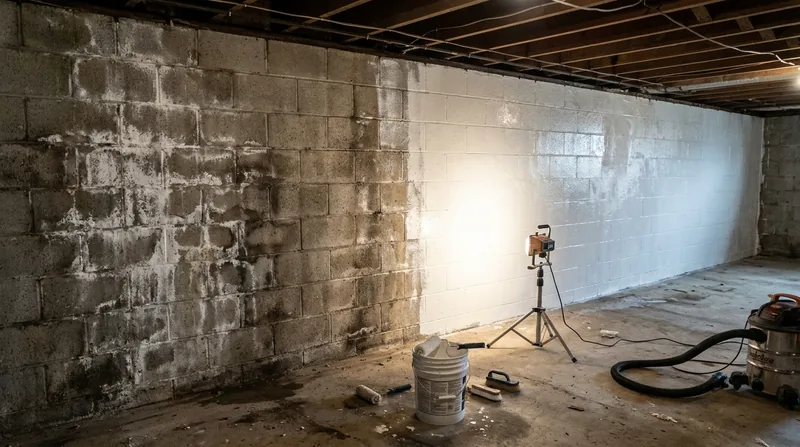




If you live in one of the 1920s-1950s brick or frame houses near downtown Greenville or College Hill, your foundation sits on brick piers or slab, and the damp line you see on the lower wall is not cosmetic. Basement Wall Sealing in Greenville starts with an honest diagnosis: on the flat coastal plain, where sandy loam sits over silty clay and the water table stays high after rain, most wall seepage comes from hydrostatic pressure and slow runoff, not from a surface that needs paint. We prep the wall, remove efflorescence, and apply penetrating or membrane sealers that actually bond to the substrate. We also tell you when sealing is the wrong answer. If water is pushing through a crack or the footing drain is backed up, a sealer will trap moisture and fail within a season. Start with a free basement inspection so we can tell you which problem you have before you spend a dollar on product.
Why Basement Wall Sealing Matters in Greenville's High Water Table
Greenville sits on flat ground where water does not run off quickly. After a tropical storm or a heavy summer downpour, the Tar River floodplain backs water up and the silty clay layer holds it against the foundation. In older homes around East Carolina University, that pressure shows up as white efflorescence, a damp band at the wall base, and a musty smell that never quite leaves. Sealing the wall correctly slows vapor drive and stops surface dampness, but it cannot hold back a rising water table. That is a drainage problem, and we say so plainly.
- Efflorescence and white salt bloom mean water is moving through the masonry, not just condensing on it.
- Damp patches that reappear after every rain point to capillary action and a sealer that was never formulated for below-grade masonry.
- Water at the wall base after a storm usually means the footing drain is clogged or the grading slopes back toward the house.
- Peeling paint and chalky block in 1950s Brook Valley and Westhaven ranches usually need efflorescence removal before any sealer goes on.
We test the wall before we recommend a product, because a penetrating sealer on a wet wall is money thrown away.
Key info: A homeowner in College Hill had a damp band along the brick pier wall that returned every August. The wall was dry to the touch in February. We sealed it in the dry window and corrected a downspout that dumped within two feet of the foundation. The damp line has not come back, and no excavation was needed.
For the official word on when structural or drainage work needs a permit in our area, check the City of Greenville's building inspection page at greenvillenc.gov, and verify current rules with the local building department before any work begins.
How We Seal Basement Walls in Greenville, Step by Step
We do not sell a sealer and walk away. The job starts with a moisture reading and a look at how water is actually entering. On a 1990s slab-on-grade home in Winterville or Ayden, the wall may only need cleaning and a breathable masonry sealer. On an older pier-foundation house near downtown, the same symptom can trace back to a blocked footing drain, and sealing alone would be a mistake. Here is the sequence we follow on a typical sealing job.
- We inspect the wall, the floor joint, and the exterior grade, and we take moisture readings at several heights.
- We remove efflorescence, loose mortar, and old failing coatings with wire brushes and a masonry cleaner.
- We patch honeycombs, tie holes, and hairline cracks with a hydraulic cement or epoxy mortar appropriate to the substrate.
- We apply a penetrating sealer on porous block and brick, or a membrane sealer on poured walls where vapor drive is the issue.
- We correct the easy fixes at the same visit, including downspout extensions and regrading that pushes water away from the wall.
- We leave you with a written note on what was sealed and what still needs a drainage fix, so nothing gets hidden.
If the inspection shows active hydrostatic pressure, we route you to the right repair instead of sealing over a problem.
Key info: A 1960s ranch in Red Banks had a chalky block wall and a musty smell after every summer storm. The sealer was not the whole answer. We sealed the wall and extended two downspouts, then recommended an interior drain tile system for the floor joint that still wept during tropical downpours. The homeowner got the full picture in one visit.
Sealing Approaches We Use on Greenville Basement Walls
Not every wall takes the same product. The table below shows the approaches we use most often in this market and where each one fits. We pick based on the wall material, the moisture source, and whether the water is vapor or liquid.
| Approach | Description | Best for |
|---|---|---|
| Penetrating sealer | Silicone or silane product that soaks into block and brick and reacts with the masonry to block capillary water. | Damp block walls with efflorescence and no active leaking. |
| Membrane sealer | Flexible coating that bridges hairline cracks and resists vapor drive on poured concrete. | Poured walls with surface dampness and minor checking. |
| Crack injection plus sealer | Epoxy or polyurethane injection into ports, then a sealer over the repaired area. | Walls with a defined crack that weeps during rain. |
| Parging repair plus sealer | Replacement of failed parging and loose mortar before sealing the sound substrate. | Older brick and block walls with spalling surface coats. |
| Drainage-first correction | Grading, downspout extensions, and footing drain work before any sealer is applied. | Walls that stay wet because the water table is the real source. |
When the diagnosis points to drainage, we say so and put the sealer on hold until the water is managed.
Basement Wall Sealing Cost in Greenville: What to Expect
Most basement wall sealing jobs in Greenville start around $1,500, and that figure covers the common case: a damp block or poured wall, efflorescence removal, patching, and a quality sealer applied to the accessible wall area. The number moves up when the wall is large, when parging has failed and needs replacement, or when we find an active crack that needs injection before sealing. A wall that weeps under hydrostatic pressure is not a sealing job at all, and we will tell you that rather than sell you a coating that fails.
Access matters as much as wall size. A finished basement with shelving and paneling takes longer to prep and protect than a bare wall. Older homes near East Carolina University often have irregular brick pier walls that take more patching and more sealer per square foot than a clean poured wall in a Winterville subdivision. We quote the actual scope after the inspection, not from a phone description.
Get two or three written estimates and compare scope, not just the bottom line. A low bid that skips efflorescence removal or patching will leave you with a coating that peels within a year. Our full pricing overview is at greenville-nc-waterproofing.com/pricing, and we will walk you through the line items so you can compare apples to apples.
Choosing a Basement Wall Sealing Contractor Near Me in Greenville
Basement wall sealing is a small job with a big failure mode: the wrong product on a wet wall traps moisture and makes the problem worse. Ask three questions before you hire anyone. First, are they licensed and insured, and can they show a certificate? Second, will they test the wall for moisture before quoting a sealer, or just sell you a bucket? Third, do they understand that sealing is not a substitute for drainage when the water table is the source? A contractor who cannot answer the third question is a painter, not a waterproofing specialist.
Get at least two written estimates and ask each one what happens if the wall still reads damp after the job. Check references from Greenville or Winterville homeowners with a similar wall type. If your home is in a historic district or under HOA rules, confirm any exterior drainage changes before work starts, and verify permit requirements with the local building department. Reach us through our contact page and we will set up the free inspection.
Basement Wall Sealing in Greenville: Pricing Guide
| Service | Price | Details |
|---|---|---|
| Penetrating sealer on block wall | Starting at $1,500 | Includes efflorescence removal, patching, and sealer on accessible wall; wall size moves the price. |
| Membrane sealer on poured wall | Starting at $1,800 | Includes surface prep and flexible coating; failed parging or heavy checking adds prep time. |
| Sealing with crack injection | Starting at $2,400 | Includes epoxy or polyurethane injection at active cracks before sealer; number of cracks drives cost. |
| Large or heavily deteriorated wall | On estimate | Needs an on-site look when parging is failing, access is tight, or drainage correction comes first. |
| Travel | Included | In Greenville and surrounding areas, no separate call-out or mileage fee. |
| Estimate | Free | Response within 24h at (252) 417-2783, no obligation to book. |
Indicative pricing, the exact cost depends on square footage, finish, and site access. Free personalized estimate within 24h at (252) 417-2783.


