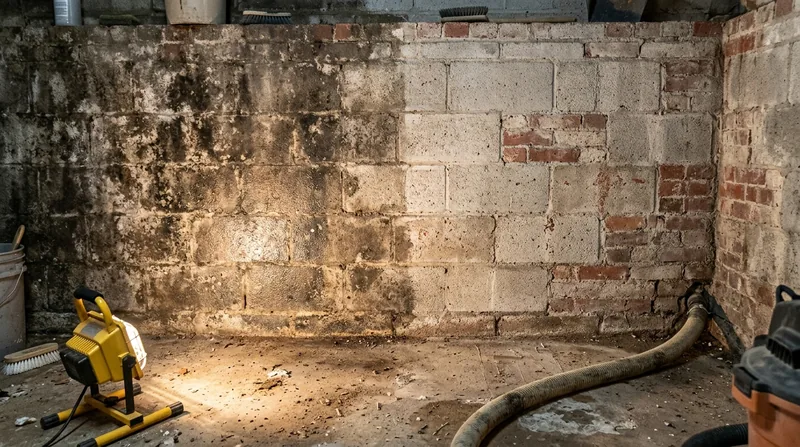




Basement Mold Remediation in Greenville: Fix the Moisture, Not Just the Stain
Greenville sits on flat coastal plain ground, sandy loam over silty clay, with a water table that stays high long after the rain stops. Around College Hill and the streets near East Carolina University, 1920s to 1950s brick and frame houses sit on brick piers or slabs, and the damp that climbs into those lower levels is what feeds mold. When you call for Basement Mold Remediation in Greenville, we treat the affected surfaces and, more importantly, find and fix the moisture source so the growth does not come back. The Tar River floodplain backs water up after tropical storms, and the slow runoff across Brook Valley, Red Banks and Westhaven keeps foundation walls wet for days. We handle the remediation and the below-grade drainage that keeps the space dry. Start with a free basement inspection so we can see what is actually happening.
Why Basement Mold Remediation Matters in Greenville's Wet, Flat Terrain
Most of the Greenville metro was built on slab or raised pier foundations, and full basements are uncommon here. That does not mean mold is rare. It means the moisture shows up in the lower rooms, along the base of foundation walls, and in the corners where humid summer air condenses on cool concrete. The ground is flat, runoff is slow, and the water table stays high, so hydrostatic pressure pushes water through cracks and porous mortar. Mold follows that moisture within days.
- We find the moisture source first, because treating visible mold without fixing the water is wasted work.
- We contain the work area so spores do not spread to the rest of the house during removal.
- We treat and remove affected drywall, framing, and concrete surfaces using accepted remediation practice.
- We correct the drainage or humidity problem that let the mold grow in the first place.
Remediation without moisture control is a temporary fix, and we tell Greenville homeowners that plainly.
Key info: In the 1950s to 1970s brick ranches of Brook Valley and Westhaven, we often find mold along the base of a slab edge where grading has settled toward the house. Correcting the grade and extending downspouts solves more than scrubbing ever will.
For official guidance on moisture and mold in buildings, the EPA's mold resources are a useful plain-language reference. Local permits for drainage or structural work are handled by the City of Greenville building department, and rules vary, so verify before work begins.
How We Run Basement Mold Remediation in Greenville, Step by Step
Our process starts with the moisture, not the mold. We inspect the foundation, the wall base, the floor joints, and the exterior grading, then use a moisture meter to map where water is entering. Only after that do we set up containment and begin remediation. This order matters in Greenville because the same flat lot and high water table that caused the problem will cause it again if the drainage is left alone.
- We inspect the basement and foundation and document moisture readings and visible growth.
- We set up containment and negative air pressure to keep spores out of living areas.
- We remove and dispose of affected porous materials such as drywall and insulation.
- We treat and clean structural surfaces, then verify with moisture readings before closing up.
- We fix the water source, whether that means crack injection, interior drainage, or grading correction.
Every job ends with a written summary of what we found, what we removed, and what we changed to keep the space dry.
Key info: A Winterville slab-on-grade home built in the 2000s had mold along the base of an interior wall after a sump pump failure. We replaced the pump, added a battery backup sump pump, and remediated the affected drywall. The moisture fix came first.
Remediation and Moisture-Control Methods We Use
The right method depends on what is wet and why. We match the approach to the surface and the water source, and we explain the tradeoffs before we start.
| Approach | Description | Best for |
|---|---|---|
| Surface treatment and removal | Containment, HEPA vacuuming, removal of affected porous materials, and cleaning of structural surfaces. | Visible growth on drywall, framing, and concrete walls. |
| Crack injection | Epoxy or polyurethane injection into foundation cracks to stop water seepage at the source. | Hairline and structural cracks in poured concrete walls. |
| Interior drainage | Perimeter drain tile and sump basin to relieve hydrostatic pressure and move water out. | Wet walls and floors after rain, high water table. |
| Humidity and vapor control | Vapor barrier and dehumidification to keep the space below the mold-growth threshold. | Musty smell and condensation without active leaks. |
Basement Mold Remediation Cost in Greenville: What to Expect
Pricing for basement mold remediation in Greenville starts from $1,500 for a contained, limited-area job. That figure covers containment, removal of affected materials, treatment, and moisture verification. The final number depends on how much material is affected, how far the moisture has spread, and what drainage or humidity correction is needed to keep it from returning. A small patch of growth along a slab edge is a different job from a full wall behind finished drywall.
Getting two or three estimates is smart because the scope should be written down. Ask each contractor what they will remove, how they will contain the work area, and what they will do about the water source. A quote that only addresses the mold and not the moisture is incomplete. Our full pricing overview lays out how we build estimates.
Basement Mold Remediation Near Me: How to Vet a Contractor Near Greenville
When you search for basement mold remediation near me, the list is long and the credentials vary widely. Greenville homeowners should ask the same questions we would ask if we were hiring. Licensed and insured status is the first check, and a legitimate contractor will provide a certificate on request. Multiple estimates, written scope, and references from similar local homes matter more than a low price.
Ask whether permits are required for any drainage or structural work, and confirm with the City of Greenville building department because rules vary. If your neighborhood has HOA requirements, check those before work begins. A contractor who hesitates on these questions is telling you something. You can contact us for a free estimate and we will walk you through the scope in plain terms.
Mold is a moisture problem before it is anything else. Fix the water, verify the readings, and the space stays dry.
Basement Mold Remediation in Greenville: Pricing Guide
| Service | Price | Details |
|---|---|---|
| Limited-area remediation | Starting at $1,500 | Containment, removal of affected materials, treatment, and moisture verification for a small area. |
| Full-wall or multi-room remediation | Starting at $3,200 | Larger affected area with finished drywall removal, framing treatment, and extended containment. |
| Remediation with crack injection | Starting at $2,400 | Includes epoxy or polyurethane injection to stop seepage at foundation cracks feeding the growth. |
| Remediation with interior drainage | On estimate | Perimeter drain tile and sump basin added when hydrostatic pressure is the underlying cause. |
| Travel | Included | In Greenville and surrounding areas, no separate call-out or mileage fee. |
| Estimate | Free | Response within 24h at (252) 417-2783, no obligation to book. |
Indicative pricing, the exact cost depends on square footage, finish, and site access. Free personalized estimate within 24h at (252) 417-2783.


