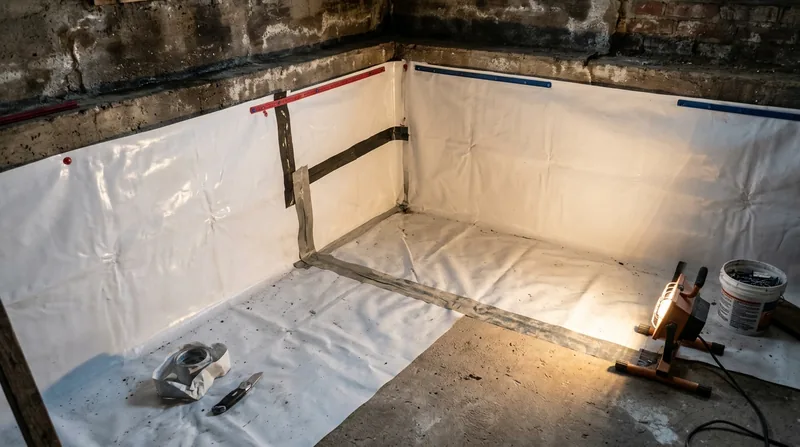




Greenville sits on flat coastal plain ground, sandy loam over silty clay, with a water table that stays high long after the rain stops. Around College Hill and the streets near East Carolina University, most 1920s to 1950s brick and frame houses sit on brick piers or slabs, and the damp soil pushes moisture straight through the masonry into the lower level. Vapor Barrier Installation in Greenville is how we stop that ground moisture from loading up the walls and slab with humidity. We install heavy-duty barrier sheets with sealed seams and taped terminations, tie them into the sump where needed, and leave the lower level dry enough to use. If you have been chasing a musty smell or sweating walls, start with a free basement inspection so we can confirm the moisture source before we quote anything.
Why Greenville's High Water Table Makes a Vapor Barrier Necessary
The Tar River floodplain backs water up after tropical storms and heavy downpours, and the ground here drains slowly. That means moisture keeps moving through the foundation walls and slab for days after a storm, even when the basement floor looks dry. A vapor barrier breaks that path, and on brick pier and slab foundations it is often the most effective first step before any drainage work.
- Ground moisture migrates through porous brick and block and shows up as efflorescence on the interior face.
- High humidity in the lower level condenses on cool slab edges and feeds mold growth on stored materials.
- Slow runoff after summer storms keeps the soil saturated and drives hydrostatic pressure against the wall.
- Older homes around College Hill and downtown often lack any below-grade moisture control at all.
A properly sealed barrier is the cheapest way to cut that steady moisture load before it becomes a wet basement problem.
Key info: In Brook Valley and Westhaven, the 1950s to 1970s brick ranches sit on slab or raised piers, and we routinely find damp slab edges and peeling floor coatings from ground moisture. A barrier installed across the slab and up the wall face addresses it directly.
For official guidance on moisture control and building permits in our area, check the City of Greenville resources before scheduling work that alters drainage.
How We Install Vapor Barriers in Greenville Homes
We start by mapping the moisture, not by selling sheeting. On a slab-on-grade home in Winterville or Ayden, that means checking the slab perimeter, wall base, and any sump basin for active seepage. On an older pier foundation near downtown, we look at the wall face and footing line for efflorescence and damp masonry. The install follows the moisture path we actually find.
- We inspect the basement walls, slab, and sump area and mark every damp zone and seam.
- We clean and prep the wall face and slab, removing loose mortar, efflorescence, and old coatings.
- We cut and fit heavy-duty barrier sheets to the wall height and slab dimensions.
- We seal overlapping seams with compatible tape and terminate the top edge with a taped mechanical fastening.
- We integrate the barrier into the sump basin and discharge path where a pump is present.
- We test the finished install and walk you through what to watch for after heavy rain.
The result is a continuous barrier that keeps ground moisture out of the living space instead of letting it wick through the masonry.
Key info: A homeowner in Grifton had damp walls and a musty smell every August. We found the slab edge wicking moisture from saturated silty clay and installed a sealed barrier tied to the existing sump. The wall face stayed dry through the next tropical storm.
If the inspection shows water coming through the wall rather than just humidity, we may recommend basement wall sealing or an interior drain system instead of, or alongside, the barrier.
Vapor Barrier Approaches We Use in Greenville
Not every basement needs the same barrier. The right approach depends on foundation type, moisture severity, and whether a sump is already in place. Here is how we match the method to the job.
| Approach | Description | Best for |
|---|---|---|
| Wall-face barrier | Heavy-duty sheet sealed to the interior wall from footing to rim. | Brick and block walls with efflorescence and damp masonry. |
| Slab barrier | Sheet laid across the slab with taped seams and a sealed perimeter. | Slab-on-grade homes in Winterville and Ayden with damp floors. |
| Sump-integrated barrier | Barrier tied into the sump basin and discharge line with a sealed collar. | Basements with an existing sump pump or high water table. |
| Full-perimeter barrier | Continuous wall and slab coverage with sealed transitions at corners. | Older downtown homes with moisture on multiple faces. |
We confirm the right approach on site, because guessing from a photo usually leads to the wrong material.
Vapor Barrier Installation Cost in Greenville: What to Expect
Most barrier work in this market starts around From $3/sq ft, and that figure moves with wall height, access, and how much prep the surface needs. A clean slab in a newer Winterville subdivision sits at the low end. A rough brick wall in a 1930s College Hill house with heavy efflorescence and old coatings sits higher, because prep takes time.
Seam count, sump integration, and whether we are working around stored items or finished walls all affect the number. We quote after the inspection, not before, and we give you a written scope so you can compare line by line.
Getting two or three estimates is smart in this trade. It lets you compare prep methods, material thickness, and warranty terms rather than just the bottom line. Our full pricing overview shows how the ranges break down.
What to Look for When Hiring a Waterproofing Contractor Near Greenville
Ask for the license and insurance certificate before anyone walks the basement. A legitimate contractor carries liability and workers compensation coverage and will email the certificate without a fight. Ask how long they have worked on this foundation type, because slab and pier foundations here behave differently from full basements.
Get at least two written estimates with a defined scope, and call references from jobs in Greenville, Winterville, or Ayden. Ask whether the work needs a permit from the local building department, since rules vary by jurisdiction and drainage changes can trigger review. If you are in an HOA, check the architectural rules before exterior discharge changes.
When you are ready to schedule, reach us through the contact page and we will set up the inspection.
Vapor Barrier Installation Near Me: What Greenville Homeowners Should Know
Most calls we get from Greenville are about a musty smell, damp walls, or condensation on stored boxes, not standing water. That pattern points to ground moisture moving through the foundation rather than a failed drain. A barrier addresses it directly, but it is not a substitute for drainage when hydrostatic pressure is the real driver.
If you see water pooling at the wall base after a storm, the better answer may be an interior drain tile system paired with the barrier. We tell you which one you need, and we say so plainly when a simple barrier is enough.
Vapor Barrier Installation in Greenville: Pricing Guide
| Service | Price | Details |
|---|---|---|
| Slab vapor barrier | Starting at $3/sq ft | Includes surface prep, heavy-duty sheet, taped seams, and sealed perimeter on a clean slab. |
| Wall-face barrier | Starting at $4/sq ft | Includes masonry prep, sheet fit from footing to rim, and taped mechanical termination at the top. |
| Full-perimeter barrier | On estimate | Wall and slab coverage with sealed corner transitions; scope depends on prep and sump integration. |
| Sump integration | From $250 | Sealed collar and barrier tie-in at the sump basin and discharge line where a pump is present. |
| Travel | Included | In Greenville and surrounding areas, no separate call-out or mileage fee. |
| Estimate | Free | Response within 24h at (252) 417-2783, no obligation to book. |
Indicative pricing, the exact cost depends on square footage, finish, and site access. Free personalized estimate within 24h at (252) 417-2783.


