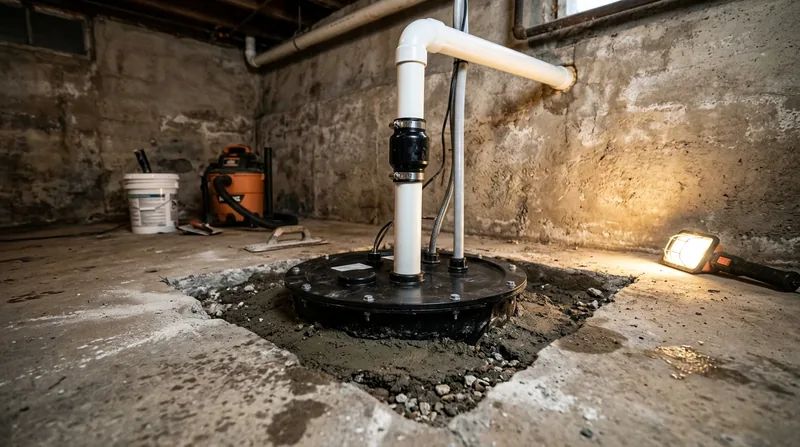




Why Sump Pump Installation & Replacement in Greenville Matters More Than You Think
Greenville sits on flat coastal plain ground, sandy loam over silty clay, with a water table that stays high long after the rain stops. Most homes here are on slab or brick pier foundations, and full basements are the exception, so when groundwater rises, it shows up as seepage at the footing, damp slab edges, and standing water in the lowest point of the house. That is exactly where a properly sized sump pump installation & replacement in Greenville earns its keep. We build new sump pits, replace tired pumps, and correct discharge lines so water leaves the foundation instead of cycling back into it. If you are weighing your options, start with our basement waterproofing service page to see how a pump fits into the full drainage picture.
Why Greenville's Flat Terrain and High Water Table Push Pumps to the Limit
From downtown and College Hill out to Brook Valley, Red Banks, and Westhaven, the ground does not shed water quickly. Slow runoff, silty clay subsoil, and the Tar River floodplain backing up after tropical storms all mean a sump basin can fill fast during a long wet spell. A pump that was undersized for a 1950s brick ranch on a raised pier foundation will cycle constantly and burn out early. That is the failure mode we see most: not a pump that never worked, but one that was never matched to the volume this ground throws at it.
- We measure the inflow rate during wet weather so the pump is sized to the actual water volume, not a guess.
- We set the basin deep enough and seal the lid to keep soil and debris out of the pit.
- We install a check valve so water does not drain back into the basin after each cycle.
- We route the discharge line to a grade that carries water away from the foundation, not back toward it.
- We test the float switch through a full cycle before we call the job done.
Every one of those steps exists because this ground punishes shortcuts within a season or two.
Key info: After Hurricane Floyd and later tropical downpours, we have pulled pumps in Ayden and Winterville that ran nonstop for days because the discharge line dumped water two feet from the foundation. Moving that line changed the whole behavior of the system.
For the official word on when a discharge or drainage alteration needs a permit, check the City of Greenville's building department pages at greenvillenc.gov before work begins, since local thresholds vary.
How We Install or Replace a Sump Pump in Greenville, Step by Step
We start by finding where the water actually enters, because a pump without a collection path just moves a puddle around. On slab homes in the 1990s and 2010s subdivisions around Winterville and Ayden, that often means tying the basin into an interior perimeter drain so water reaches the pit from all sides. On older pier-and-brick homes near East Carolina University, we look at footing drains and grading first. Then we size, set, and test.
- We inspect the foundation, the low point of the slab or basement, and the existing discharge route.
- We cut and set a new sump basin at the true low point, or reuse a sound existing pit.
- We connect the basin to the drain tile or interior perimeter drain so water flows in from the whole perimeter.
- We install a correctly sized pump, check valve, and sealed lid.
- We run the discharge line to a safe outlet and correct the grade around it.
- We fill the basin and cycle the pump several times to confirm float travel and flow.
If the surrounding drainage is the real problem, we point you to our interior drain tile system rather than selling you a bigger pump that will not fix it.
Key info: A homeowner in Grifton had a pump that ran every ten minutes after rain. The pump was fine. The basin had no collection tile feeding it, so water seeped in through the slab and pooled at the pit edge. Adding a short interior drain run cut the cycling dramatically.
Sump Pump Approaches We Use in Greenville Homes
Not every house needs the same setup. The right choice depends on foundation type, how much water arrives, and whether the power stays on during a storm. Here is how the main approaches compare.
| Approach | Description | Best for |
|---|---|---|
| New sump pit and pump | Cut a basin at the low point, set a sized pump, check valve, and sealed lid, then route discharge away from the house. | Slab homes with recurring seepage and no existing pit. |
| Pump replacement only | Swap a failed or undersized pump in a sound basin, verify float travel, and test through several cycles. | Existing pit in good shape with a burned-out or noisy pump. |
| Discharge line correction | Reroute the outlet to a grade that carries water away, add freeze protection, and stop short cycling. | Pumps that run constantly because water returns to the foundation. |
| Battery backup addition | Add a backup pump and battery so the system keeps working through storm-related outages. | Homes that lose power during tropical storms and long wet spells. |
| Basin tied to interior drain | Connect the pit to an interior perimeter drain so water reaches it from the whole foundation edge. | Hydrostatic pressure pushing water up through the slab across a wide area. |
We match the approach to the house, not the other way around, and we tell you plainly when a simple replacement is enough.
Sump Pump Installation & Replacement Cost in Greenville: What to Expect
Most straightforward replacements in Greenville start from $1,200, which covers a quality pump, check valve, sealed lid, and a tested discharge route. A full new pit with collection tile, or a basin tied into an interior drain, runs higher because it is more excavation and more material. Access matters too: a tight mechanical closet or a finished floor over the pit adds labor. So does a long discharge run that has to cross a sidewalk or reach a daylight outlet.
Two houses on the same street can land in different price ranges for reasons that only show up on site. That is why we walk the foundation and watch the water before quoting. Get two or three estimates, ask what pump model and basin size each one includes, and compare the discharge plan, not just the number. Our full pricing overview lays out how the pieces add up.
Hiring a Sump Pump Contractor Near Greenville: What to Check Before You Sign
Ask for the license and insurance certificate before anyone touches your foundation, and confirm the coverage is current. Get at least two written estimates that name the pump model, basin size, and discharge route. Ask for references from jobs in similar housing stock, because a 1920s pier foundation and a 2005 slab-on-grade in Winterville are different problems. If your neighborhood has an HOA, check its rules on exterior discharge and equipment placement first. And confirm who pulls any permit the local building department requires for drainage or discharge changes.
When you are ready to talk through your situation, reach us through the contact page and we will set up a free inspection.
Sump Pump Installation & Replacement in Greenville: Pricing Guide
| Service | Price | Details |
|---|---|---|
| Pump replacement in existing basin | Starting at $1,200 | Includes quality pump, check valve, sealed lid, and full cycle test at the pit. |
| New sump pit and pump installation | Starting at $1,850 | Covers cutting and setting a new basin, pump, lid, and discharge routing to grade. |
| Basin tied to interior drain tile | On estimate | Needs an on-site look because drain run length and slab conditions vary widely. |
| Battery backup pump addition | Starting at $650 | Adds backup pump, battery, and alarm so the system runs through storm outages. |
| Travel | Included | in Greenville and surrounding areas, no separate call-out or mileage fee |
| Estimate | Free | Response within 24h at (252) 417-2783, no obligation to book |
Indicative pricing, the exact cost depends on square footage, finish, and site access. Free personalized estimate within 24h at (252) 417-2783.


